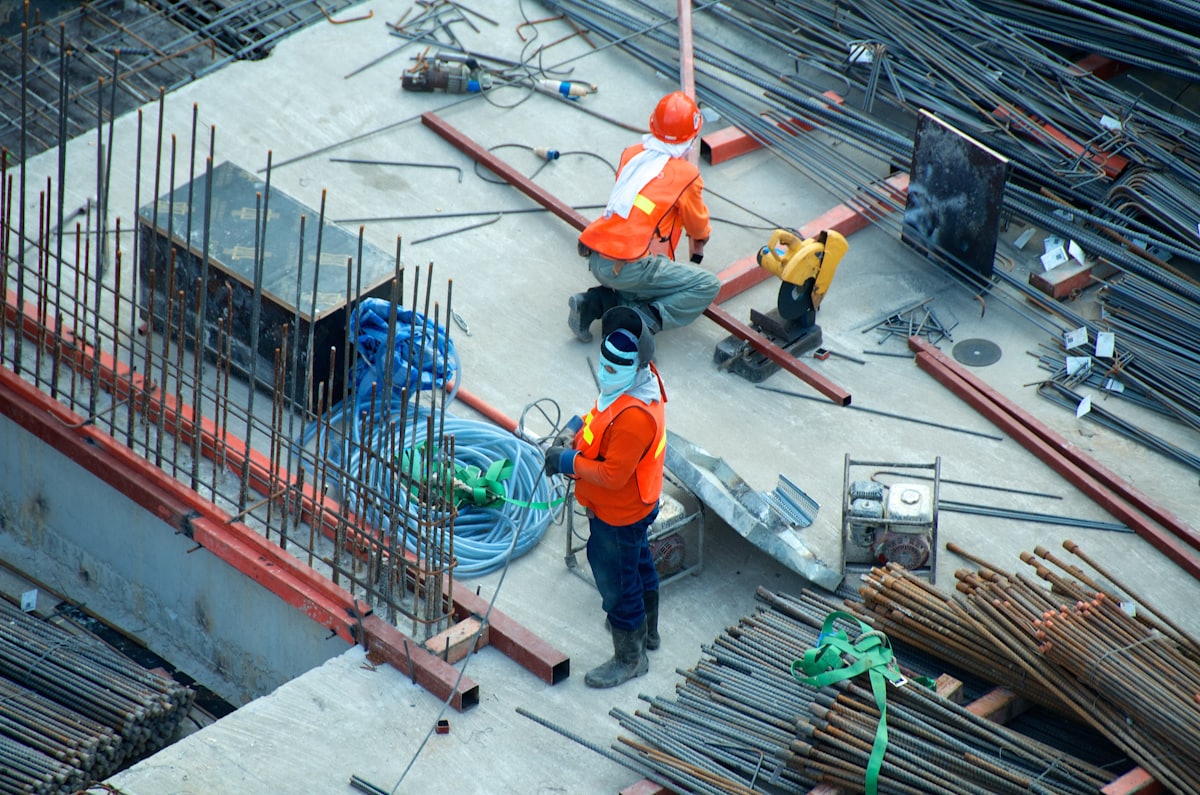
Reinforced-concrete formwork is the fundamental fabrication stage that shapes a building's load-bearing system in the correct dimensions, levels and geometry. In Samsun, soil conditions and the seismic code make it critical that formwork is built in exact accordance with the structural project.
Know the Element Type
Foundation, shear wall, column, beam and slab formwork each require different loads and details; every element is built with its own load-carrying and tightness rules.
Plywood and Tunnel Formwork
Film-faced plywood gives a smooth concrete surface and is reusable many times, while tunnel formwork pours walls and slabs at once for speed in serial housing.
Level and Plumb Check
Before pouring, every column and wall must be plumb and every slab level; deviations create permanent errors that cannot be fixed later.
Scaffolding and Shoring
The props and scaffolding beneath slab and beam formwork must be built dense and sturdy enough to safely carry the weight of fresh concrete.
Preparing for the Pour
The formwork interior must be cleaned, release oil applied, and reinforcement and cover checked; vibrating during the pour prevents voids.
Wait for Stripping Time
Formwork must not be stripped before the concrete reaches sufficient strength over a period that depends on air temperature; early stripping causes deflection and cracks.
Advantages
Structural Safety: Project-compliant formwork ensures columns and walls form in their designed cross-section, directly supporting seismic safety.
Smooth Surface: Quality formwork produces flat, void-free concrete surfaces that reduce the need for plaster.
Time and Cost: Reusable system formwork shortens the cycle time, lowering labor and overall fabrication cost.
Conclusion
As Samsun Tadilat İnşaat, we provide formwork services across Samsun, primarily in Atakum, İlkadım, Canik and 19 Mayıs. Contact us for a free survey and a clear quote.